Showing posts with label Ocean conservation. Show all posts

8.13.2010

Pacific Oceanscape Makes History - Governments Assemble to Protect Pacific


PORT VILLA, Vanuatu -- An unprecedented agreement toward the cooperative stewardship of a vast swath of Pacific Ocean has been reached, and conservationists are heralding it as among the most ambitious, innovative, and collaborative marine initiatives on Earth.

Meeting in Port Villa, Vanuatu at the annual Pacific Islands Leadership Forum, Heads of State and Governments from 15 nations endorsed a draft framework for the long-term, sustainable, and cooperative management of 38.5 million km2 (nearly 24 million square miles) surrounding their collective islands, or comparatively larger than the land size of Canada, the United States and Mexico - combined.

The Framework, called the Pacific Oceanscape, aims to address all ocean issues from governance to climate change, as well as design policies and implement practices that will improve ocean health, increase resources and expertise, and encourage governments to factor ocean issues into decisions about economic and sustainable development. It represents perhaps the largest marine conservation management initiative in history, as measured by countries and area, and a new united Pacific voice on ocean conservation and management.

In a Communiqué announcing the agreement, leaders from Australia, the Cook Islands, the Federated States of Micronesia, the Republic of Kiribati, Nauru, New Zealand, Niue, Palau, Papua New Guinea, the Republic of Marshall Islands, Samoa, Solomon Islands, Tonga, Tuvalu, and Vanuatu agreed to a Pacific Oceanscape framework, and "reiterated the critical importance of ensuring the sustainable development, management and conservation of our oceans."

Introduced to Forum Leaders in 2009 by President Anote Tong of Kiribati, the Pacific Oceanscape plan was designed with support from Conservation International (CI) which has also committed technical and scientific assistance for implementation.

"It is, without doubt, the most ambitious, most innovative, and most well-grounded marine initiative I have seen in my 32 years as a marine biologist and conservationist," said Dr. Greg Stone, CI's Chief Ocean Scientist and Senior Vice President for Marine Conservation. "What we are seeing here is the dawning of a new era for marine management at such a massive, multi-national scale, and the kind of leadership that brings about real, positive change."

Increasing threats, including climate change, to Pacific Island states has spurred their Leaders toward the historic measures.

"Climate change threatens our very existence. With rising sea levels, overfishing, warming ocean temperatures pollution, and acidification, our oceans are changing in ways that our ancestors could not have imagined," said President Tong,. "There is an urgent need for us to join together and face these common threats, if we are to successfully manage and conserve the ocean's precious resources for present and future generations of people."

Tong added, "The new Pacific Oceanscape will help us build resilience in ocean ecosystems so that marine life has the best chance of adapting. Only by doing this can there be some assurance that the oceans, and millions of people who depend on them directly for their livelihood and well-being, will survive the onslaught of global climate change."

The Pacific Oceanscape will address many ocean challenges in the region both in countries' Exclusive Economic Zones (EEZs) as well as the High Seas connecting them, including climate change, security and enforcement, and the establishment of multi-use marine protected areas.

CI's Pacific Islands Program Marine Director, Sue Miller-Taei, speaking from Samoa, emphasized the impressive regional ownership of the new plan.

"Input and ownership across all sectors, from fisheries to universities, environmentalists, and government, has created a framework that everyone wants to succeed. In my twenty years of working in this region, I have never seen such widespread support and engagement. This is a precious commodity."

Agreement of the Pacific Oceanscape plan this week came on the heels of similar large-scale success in the region as UNESCO named Kiribati's Phoenix Islands Protected Area (PIPA) a new, natural World Heritage site. The designation makes PIPA's 408,250 km2 the largest marine World Heritage site on the planet, and a natural climate change research laboratory that offers scientists many opportunities to study impacts of climate change, well into the future.

Working alongside other marine initiatives in the region (eg., the Coral Triangle Initiative, the IUCN Pacific Ocean 2020, the Micronesian Challenge) implementation of the Pacific Oceanscape will help to contribute to wider management of the Pacific Ocean, and organize the region on ocean issues with a holistic approach. The central Pacific contains some of the most pristine and robust coral reefs, islands, seamounts and marine systems remaining in the world today.

With formal adoption of the new Pacific Oceanscape, leaders now hope their demonstrated leadership and success in improving ocean health will spur replication among other governments and regions that depend on the many benefits of a healthy ocean for their own national wellbeing.

Source: http://www.underwatertimes.com/news.php?article_id=64825100137


About Oceanic Defense
We are an international non-profit organization with members in over 60 countries, spanning 6 continents with 1 mission; healthy aquatic ecosystems free from human abuse and neglect. Oceanic Defense teaches people to protect our oceans by acting responsibly as consumers and by making smart decisions in our daily lives. Whether we are buying groceries, commuting to work, planning a vacation or advocating within our own communities; each action we take or decision we make either helps or hurts our oceans. We empower people to be part of the solution rather than part of the problem and work together to protect our blue planet.

Join us on Facebook:www.facebook.com/OceanicDefense
Visit our official website:www.oceanicdefense.org
Follow us on Twitter:www.twitter.com/OceanicDefense

4.08.2010

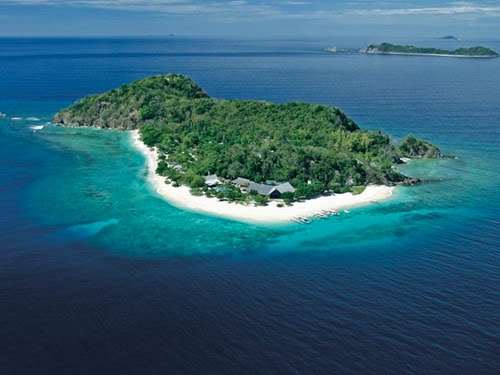
Futuristic underwater resort to be built off Palawan


MANILA, Philippines—Imagine an underwater hotel room with a panoramic view of tropical fish swimming over large coral reefs, manta rays gliding in the water and turtles chasing after tiny squids.

Science fiction? Not if businessman Paul Moñozca can help it.

Moñozca, a Singapore-based financier who heads a group of international investors, plans to start a futuristic underwater resort off the island of Palawan as part of an aggressive venture into the ecotourism business.

The project, dubbed “Last Frontier Resort,” is expected to bring in a total of $1 billion in investments spread over a 10-year period—an average of $100 million a year which, its proponents hope, will help create thousands of direct and indirect jobs in the Palawan.

Moñozca—known for his advocacies of helping improve the overseas remittance business, acquiring stakes in the US professional basketball league and junior circuit stock car racing teams—is the main driver of the project.

His Monaco-based philanthropic fund, dubbed “Spirit,” plays a lead role in the development of marine habitats and ocean protection initiatives.

The Last Frontier Resort will be built with submarine technology. When completed, the proposed underwater habitat will be the biggest in the world.

The project has been in the planning stage since last year, and its proponents have identified a group of islands in the Calamianes cluster as the site for development.

The site is owned by businessman and resort developer Steve Tajanlangit. It is made up of a group of seven islands in close proximity to each other, and another group of seven islands outside the main cluster.

The resulting 14-island project will be the largest of its kind in the world.

Sea spiders

The first phase calls for semi-submersible units called “Sea Spiders,” which will be built by a US firm that specializes on submarines, to serve as observation decks. Each sea spider can accommodate 30 tourists.

To rival similar projects such as the underwater resorts of Dubai, Fiji and the Caribbean, the second phase calls for a 100-room underwater hotel in partnership with a high-end boutique hotel brand spread over the cluster of seven islands.

Suite-size rooms will have a 270-degree view of the ocean underwater with 20-to 40-meter visibility. These rooms will be connected by underwater corridors. A further 85 rooms will be built on another cluster of seven islands.

Quake-free zone

Project proponents chose the pristine islands of Palawan because of its recent standing as a quake-free zone and its clear and cove-protected waters.

One of the site’s islands sits adjacent to the Calauit Nature Reserve. The islands nearby are ideal jump-off points for scuba diving.

“The blue print encompasses a strict adherence to protect the environment and the biodiversity of Palawan,” the group said in a statement.

“Groups of scientists from the Philippines and around the globe are part of the project’s protective strategy especially focused on its long stretches of coral reefs which have previously encountered illegal dynamite and cyanide fishing,” it added.

PricewaterhouseCoopers Philippines serves as financial adviser to the project, which developers expect to be completed by 2013.

By Daxim Lucas
Philippine Daily Inquirer

Source: http://newsinfo.inquirer.net/inquirerheadlines/nation/view/20100405-262424/Futuristic-underwater-resort-to-be-built-off-Palawan


About Oceanic Defense
We are an international non-profit organization with members in over 60 countries, spanning 6 continents with 1 mission; healthy aquatic ecosystems free from human abuse and neglect. Oceanic Defense teaches people to protect our oceans by acting responsibly as consumers and by making smart decisions in our daily lives. Whether we are buying groceries, commuting to work, planning a vacation or advocating within our own communities; each action we take or decision we make either helps or hurts our oceans. We empower people to be part of the solution rather than part of the problem and work together to protect our blue planet.

Join us on Facebook:
www.facebook.com/OceanicDefense
Visit our official website:
www.oceanicdefense.org
Follow us on Twitter:
www.twitter.com/OceanicDefense

2.16.2010

Sustainable Fisheries Needed for Global Food Security


Fish at a fish market. Seafood is a significant source of protein for nearly 3 billion people and is the planet's most highly traded food commodity, contributing to the livelihoods of more than 560 million people. But a lack of coordinated policy threatens global seafood supplies. (Credit: iStockphoto/Thaddeus Robertson)

ScienceDaily — Increased aid from developed countries, earmarked specifically for sustainable seafood infrastructure in developing countries, could improve global food security, according to a policy paper by an international working group of 20 economists, marine scientists and seafood experts in the Feb. 12 issue of Science.

Seafood is a significant source of protein for nearly 3 billion people and is the planet's most highly traded food commodity, contributing to the livelihoods of more than 560 million people. But a lack of coordinated policy threatens global seafood supplies.

To help safeguard future supply, "the price of seafood has to reflect the cost of maintaining ecosystem health in the countries that capture or farm most of it," says Martin D. Smith, lead author of the paper and associate professor of environmental economics at Duke University's Nicholas School of the Environment. "Many imports are coming from developing countries that are not necessarily well-positioned to manage their resources sustainably."

"In an ideal world, each country governs its own resources well and the seafood trade contributes to worldwide economic growth and food security," Smith says. "But that's not the world we live in right now." Developing countries may produce more seafood than they can consume, exporting it and using the earnings to purchase other foods, goods or services.

In their Science article, Smith and his co-authors examine the complex environmental, political and economic factors that jeopardize global seafood supplies and livelihoods.

"Issues of resource ownership and governance are at the top of the list," says Cathy A. Roheim of the University of Rhode Island. No one owns fish stocks or has sole control over what their catch limits should be, or what type of gear or practices can be used to catch them. This has pushed many stocks beyond maximum sustainable yields, and has led to the current precarious role of fisheries in food security.

Concurrently, "aquaculture (farming seafood) has great promise for enhancing food security but is also threatened when regulations fail to protect the supporting ecosystems," says Smith.

Smith, Roheim and their colleagues weigh the pros and cons of three policy options to sustain seafood production.

Trade policies such as import bans and tariffs could be used to punish countries that fail to meet sustainability standards, "but these are rather blunt instruments," Smith says. "In the short run, you may end up hurting people who are the most vulnerable."

Private incentives, such as ecolabeling, that raise the price of seafood to help pay for sustainable practices, are another option. But it's not clear from existing studies if enough consumers will voluntarily pay more for seafood. And raising the price of high-valued products such as shrimp or tuna, which are mostly exported to developed countries, could backfire. Consumers might then seek out less expensive alternatives that people in poor, developing countries depend on. This may raise prices of low-valued products and put products with high nutritional value out of reach of the poorest of the poor.

A third option -- allocating more foreign aid for sustainable infrastructure in developing countries -- provides clear advantages, Smith believes. By specifically earmarking aid for things like sustainable fishing gear, improved management, sustainable aquaculture facilities, or systems to verify sustainability compliance, developed countries will foster food security and ecosystem health, and strengthen seafood trade, without causing short-term hardships to consumers or producers.

"We're not suggesting that foreign aid for sustainability should replace other aid that contributes to food security," Smith notes. "We're just saying this is an option that is often overlooked."

The Duke-led working group is funded by the National Center for Ecological Analysis and Synthesis. Larry Crowder, director of the Nicholas School's Center for Marine Conservation, and Mary Turnipseed, a PhD student at the school, co-founded and co-direct the group with Smith.

Other members come from National Center for Ecological Analysis and Synthesis; University of Rhode Island, University of California-Santa Barbara; University of Stavanger, Norway; Hawaii Institute of Marine Biology; University of Georgia; University of Arizona; Stanford University; World Wildlife Fund; Southwest Fisheries Science Center; Memorial University and Dalhousie University, Canada; Norwegian University of Life Sciences; Whole Foods Market; and Comunidad y Biodiversidad A.C., Mexico.

Source: http://www.sciencedaily.com/releases/2010/02/100211141134.htm


About Oceanic Defense
We are an international non-profit organization with members in over 60 countries, spanning 6 continents with 1 mission; healthy aquatic ecosystems free from human abuse and neglect. Oceanic Defense teaches people to protect our oceans by acting responsibly as consumers and by making smart decisions in our daily lives. Whether we are buying groceries, commuting to work, planning a vacation or advocating within our own communities; each action we take or decision we make either helps or hurts our oceans. We empower people to be part of the solution rather than part of the problem and work together to protect our blue planet.

Join us on Facebook:
www.facebook.com/OceanicDefense
Visit our official website:
www.oceanicdefense.org
Follow us on Twitter:
www.twitter.com/OceanicDefense

1.27.2010

Fleet of High-Tech Robot 'Gliders' to Explore Oceans


ScienceDaily— The Leibniz Institute of Marine Sciences (IFM-GEOMAR) in Kiel, Germany, recently obtained the biggest fleet of so-called gliders in Europe. These instruments can explore the oceans like sailplanes up to a depth of 1000 metres. In doing so they only consume as much energy as a bike light. In the next years up to ten of these high-tech instruments will take measurements to better understand many processes in the oceans. Currently scientists and technicians prepare the devices for their first mission as a 'swarm' in the tropical Atlantic.

They may look like mini-torpedoes, yet exclusively serve peaceful purposes. The payload of the two-metre-long yellow diving robots consists of modern electronics, sensors and high-performance batteries. With these devices the marine scientists can collect selective measurements from the ocean interior while staying ashore themselves. Moreover, the gliders not only transmit the data in real time, but they can be reached by the scientists via satellite telephone and programmed with new mission parameters.

As such the new robots represent an important supplement to previous marine sensor platforms.

"Ten year ago we started to explore the ocean systematically with profiling drifters. Today more than 3000 of these devices constantly provide data from the ocean interior," explains Professor Torsten Kanzow, oceanographer at IFM-GEOMAR. This highly successful programme has one major disadvantage: the pathways of the drifters cannot be controlled.

"The new gliders have no direct motor, either. But with their small wings they move forward like sailplanes under water," says Dr. Gerd Krahmann, a colleague of Professor Kanzow. In a zigzag movement, the glider cycles between a maximum depth of 1000 metres and the sea surface.

"By telephone we can 'talk' to the glider and upload a new course everytime it comes up," explains Krahmann. A glider can carry out autonomous missions for weeks or even months. Every glider is equipped with instruments to measure temperature, salinity, oxygen and chlorophyll content as well as the turbidity of the sea water.

The IFM-GEOMAR has been the first institute in Europe to be committed to the new technology. "We tested different devices and we had to learn the hard way, too," oceanographer Dr. Johannes Karstensen says. "This way we have been able to contribute to the glider development, and now we have gathered knowledge required for successful glider operations," he adds.

Within the context of a special investment IFM-GEOMAR was able to obtain six new gliders adding to a total of nine altogether, which is the biggest fleet of that kind in Europe. Manufacturer of the IFM-GEOMAR-gliders is the Teledyne Webb Research Inc. in the USA.

A very successful mission using a single glider took place between August and October 2009 in the Atlantic Ocean, south of the Cape Verde Islands. The robot carried out measurements along a more than 1000 kilometres long track autonomously, before it was recovered by the German research vessel METEOR. The data collected are accessible online at http://gliderweb.ifm-geomar.de/html/ifm03_depl05_frame.html.

Now, for the first time the scientists in Kiel prepare a whole fleet of gliders for a concerted mission. After final tests the robots will be released mid-March 2010 at about 60 nautical miles north-east of the Cape Verde Island of Sao Vicente. For two months they will investigate physical and biogeochemical quantities of the Atlantic Ocean around the oceanographic long-term observatory TENATSO.

Goals of the experiment lead jointly by Prof. Torsten Kanzow, Prof. Julie LaRoche (marine biology) and Prof. Arne Körtzinger (marine chemistry) are to get new insights into water circulation and stratification as well as their impact on chemical and biological processes. With the glider swarm the scientists can sample a complete "sea-volume" and not just a single point or a single cross-section in the ocean. The gliders will be remotely controlled from a control centre at the IFM-GEOMAR in Kiel.

"This technology enables us to observe the upper layers of the ocean much more effectively and thus much less expensive than previously," says Prof. Dr. Martin Visbeck, Deputy Director of the IFM-GEOMAR and Head of the research division Ocean Circulation and Climate Dynamics.

Source: http://www.sciencedaily.com/releases/2010/01/100114162345.htm


About Oceanic Defense
We are an international non-profit organization with members in over 60 countries, spanning 6 continents with 1 mission; healthy aquatic ecosystems free from human abuse and neglect. Oceanic Defense teaches people to protect our oceans by acting responsibly as consumers and by making smart decisions in our daily lives. Whether we are buying groceries, commuting to work, planning a vacation or advocating within our own communities; each action we take or decision we make either helps or hurts our oceans. We empower people to be part of the solution rather than part of the problem and work together to protect our blue planet.

Join us on Facebook:
www.facebook.com/OceanicDefense
Visit our official website:
www.oceanicdefense.org
Follow us on Twitter:
www.twitter.com/OceanicDefense

1.25.2010

Bubbles in Ocean to Answer Questions About Climate, Sound, Light


ScienceDaily — The bubbles in your champagne that appear to jump out of your glass and tickle your nose are exhibiting a behavior quite similar to the tiny bubbles found throughout the world's oceans, according to bubble physicist Helen Czerski.

But while the champagne bubbles are likely to raise your spirits, those in the ocean can cause clouds to form and affect the climate.

"Bubbles are little packets of gases that rise or fall and can be carried around as if they're on little conveyor belts," said Czerski, a post-doctoral fellow at the University of Rhode Island Graduate School of Oceanography. "They carry carbon dioxide and oxygen from the atmosphere down into the ocean, and then when they go back up again they pop and sulfur compounds from marine plants are sent upward, forming particles in the air that lead to the formation of clouds."

Czerski is studying how to detect and count ocean bubbles of different sizes to help scientists in other disciplines create more accurate models. She said that scientists have found it difficult to judge the effect of bubbles on their data for years and usually have had to add a "fudge factor" to account for them.

"For instance, bubbles ring like bells when they are formed or when sound waves go past them, and if you're studying sounds traveling through the ocean -- like sounds from whales or sonar -- bubbles can get in the way of what you're trying to listen for," said Czerski, who earned a Ph.D. from Cambridge University before spending a year studying bubbles at Scripps Institution of Oceanography in San Diego and then moving to URI.

"Bubbles also scatter light strongly in the oceans and make things cloudy, so if you're studying light in the ocean you need to understand bubbles," she added.

The URI scientist uses an acoustical resonator to detect and count bubbles of different sizes in the water column. The device can detect bubbles from 3 to 170 microns in size, and she is assessing the accuracy and uncertainty in the measurements.

She recently used the resonator to collect bubble data near the Hawaiian Islands and in the Santa Barbara Channel off Southern California. She counts bubbles down to 10 meters deep -- most bubbles don't go down much further than that, she said. The big ones float back to the surface while the smallest ones gets squeezed out by the pressure as they sink.

"Just after a wave breaks, there are loads of bubbles and they're changing really, really quickly," Czerski explained. "They're stretching and squishing and bumping into each other and breaking into smaller bubbles and they're doing it all too fast for us to see directly. Whenever they break up, each new bubble makes a 'ping' sound, and if you hear it you can say something about those new bubbles."

Czerski said that understanding the physics of bubbles is increasingly important as climate models become more and more refined.

"We need to study bubble distribution and where they go in the water column to understand the exchange of gases that they carry," she said.

According to Czerski, while carbon dioxide and oxygen get carried into the ocean via bubbles, a chemical compound produced by phytoplankton gets carried out of the ocean via bubbles.

"No one really knows why phytoplankton create dimethyl sulfide, but they do, and it passes into bubbles and is carried up and out," she said. "These bubbles supply sulfur to the atmosphere, which acts as a seed for cloud droplets to form.

"Climate is made up of a whole bunch of little things, including bubbles, and these little things matter because there are lots of them," Czerski said.

Czerski began studying bubbles after earning a Ph.D. in a field she described as "blowing things up," which included becoming expert at high-speed photography. She then looked for disciplines in which she could apply this knowledge.

"I've always been fascinated by small things that do stuff that's too fast for us to see," she said. "And I like building experiments that help us see those things."

She learned to scuba dive in order to deploy instruments for measuring bubbles, and she now believes that getting in the water is a vital step for any aspiring bubble scientist.

"You can't really understand what's going on under the sea unless you go there yourself," Czerski concluded. "There is a huge benefit to directly experiencing the world you're studying. The rules are different down there."

Source: http://www.sciencedaily.com/releases/2010/01/100121135853.htm


About Oceanic Defense
We are an international non-profit organization with members in over 60 countries, spanning 6 continents with 1 mission; healthy aquatic ecosystems free from human abuse and neglect. Oceanic Defense teaches people to protect our oceans by acting responsibly as consumers and by making smart decisions in our daily lives. Whether we are buying groceries, commuting to work, planning a vacation or advocating within our own communities; each action we take or decision we make either helps or hurts our oceans. We empower people to be part of the solution rather than part of the problem and work together to protect our blue planet.

Join us on Facebook:
www.facebook.com/OceanicDefense
Visit our official website:
www.oceanicdefense.org
Follow us on Twitter:
www.twitter.com/OceanicDefense

12.10.2009

Time is running out for Atlantic Bluefin Tuna - YOU can help them

Our friends at PEW Environmental Group need your help. They are trying to get the National Marine Fisheries Service (NMFS) to reconsider new fishing regulations that could speed the depletion of Atlantic Bluefin tuna.

FROM PEW:
Atlantic Bluefin tuna is close to population collapse. Studies show that the western Atlantic population has declined 82% since 1970. Scientists estimate that there are only 41,000 reproductively mature bluefin tuna left in the western Atlantic. In March 2010, nations around the world will vote on a proposal to prohibit the international commercial trade in Atlantic bluefin tuna. The United States must lead the world in protecting these imperiled fish, and those efforts begin at home.

Unfortunately, the National Marine Fisheries Service (NMFS) recently unveiled a proposal to increase the killing of bluefin tuna in U.S. waters. At a time of great uncertainty and risk for this depleted species, NMFS should slow down and not rush to implement these new fishing regulations. In addition, NMFS must consider closing the Gulf of Mexico to pelagic longline fishing, because this wasteful fishing practice incidentally kills hundreds of imperiled bluefin tuna that use this area for reproduction each year.

You can help protect bluefin tuna today! Please send a letter to the NMFS before December 21, and tell them to slow down this misguided proposal.

TO LEARN MORE AND SEND YOUR LETTER CLICK HERE

11.13.2009

OD Announces Youth Ambassador; Omar Mulla


Omar Mulla, 16 year old Oceanic Defense Youth Ambassador

Here at Oceanic Defense, we understand that to effectively communicate a lasting message about the importance of aquatic conservation, we must reach all generations and every demographic. We seek out people of all ages that have a passion for and a dedication to protect our fragile blue planet.

We have been overwhelmed by the outpouring of support from the ocean community and, most importantly, the support of young people that will inherit a suite of our environmental problems – created, primarily, by us, their elders caught up in mindless consumerism and over-consumption.

Oceanic Defense looks to the future, and we believe we are in good hands if our youth membership is any indication. For example, Omar Mulla; a 16 year old student from Daphne, Alabama, a dedicated ocean advocate, and now an Oceanic Defense Youth Ambassador.

Omar contacted Oceanic Defense a few month ago through his school’s environmental group inquiring about assistance with a shark conservation program. It was immediately clear that Omar was on a mission to protect sharks.

Shortly after meeting Omar we knew he was a member of our Aquatic Army. With his determination and our guidance, Omar went on to lead an education outreach effort in his community about 100% Catch and Release shark fishing tournaments. He reported back to us and to the shark conservation community about the Destin Shark Saturdays Tournament (currently a catch & kill format) and some of his carefully collected information was successfully presented to the Florida Fish and Wildlife Commission’s recent public workshop in support of increased protections for Lemon sharks. After discussions with Omar and his family, we agreed that he should be our very first Oceanic Defense Youth Ambassador.

A position of great responsibility and potential; an OD Youth Ambassador is empowered to communicate to and motivate his/her peers to encourage positive change and promote conservation.

It is with great pride that we introduce: Omar Mulla, Oceanic Defense Youth Ambassador.

OD:
What's your name, how old are you and where do you live?


OM:
My name is Omar Mulla, I am 16 years old and I live in Daphne, Alabama.

OD:
How did you get interested in ocean conservation?


OM:
Conservation has always been a passion of mine, and so has the ocean. My interest in ocean conservation really took off when I started realizing how serious the problems facing our oceans are, and how important it is that we protect what we have in every way possible. When I saw that so many environmental problems were being overlooked and ignored (while worsening), I started feeling frustration and I wanted to get up and do something about it; I decided I wasn’t going to lie down while our planet deteriorates because of ignorance, greed, and lack of education. With my decision came the realization that I as an individual have the power to do something about what I see is wrong with the way our planet is being treated.


OD:
What do your friends & school mates think of your efforts?

OM:
My friends and school mates are very supportive of my efforts, and many have looked at what I’ve done and admire that I am taking a stand for something I feel strongly about. My actions have even influenced my friends and caused them to think more about why they too should take a stand by getting involved, and many have already taken that initiative. It’s great to see fellow peers branching off of my ideas to form their own. For example, I took the lead in my school’s environmental club this year, and I began to introduce ideas such as fundraising for conservation organizations, expositions, and even more direct things like campaigning for shark conservation (which we did this year in Destin, FL). These ideas were much bigger and called for more involvement in real-world issues than what the club was used to doing. When students saw how many opportunities they had to really do something on a large scale, they started thinking and putting their own ideas into motion. It’s a great thing to see how just one person and one voice can bring about a unified effort of so many different people.

OD:
What else do you like to do?

OM:
I have a wide variety of interests aside from conservation and helping the environment. For example, another passion of mine that involves the ocean is surfing –it’s an unparalleled experience that I absolutely love. My other outdoor activities include things like kayaking (I’m a member of my school’s kayak club), cycling, and hiking. I also enjoy gardening; right now I’m planning to construct a raised vegetable garden (I’m waiting until spring) so that our household can be a little more self-sufficient. Another big hobby of mine is also designing and building radio controlled vehicles. I like to learn and practice various martial arts, and I also practice meditation and yoga. I like to cook as well and I have a great appreciation for the culinary arts. In school I have been involved in activities such as Cross Country, Chess Team, Tennis, and Science Olympiad.

OD:
Do you scuba dive?

OM:
I do not currently scuba dive, nor do I have any scuba experience. However, I would love to be able to descend into the underwater realm and I definitely want to give scuba diving a go. I’m big on the idea of achieving a unity with the ocean, and I feel like I’d be able to do just that while visiting the world beneath the waves.


OD:
If you could change anything about the way we treat the ocean what would it be?

OM:
If I could change anything about the way we treat the ocean, I would build our respect for it by changing our attitude. Many people don’t care about what happens to the ocean and don’t understand the impact of their actions. They believe that the ocean is nothing to worry about and that it can magically heal itself no matter what we do to it. The way I would put it would be to treat the ocean much like we treat ourselves. We’re careful about maintaining a healthy body –we wouldn’t want to be putting things like plastics and chemicals into our systems. Those are things that could potentially be fatal, and they are equally harmful to the ocean. We know that our bodies aren’t going to “magically heal” on their own if we treat them like that; the same is true for the oceans. If this same attitude and respect are shown for the oceans, then not only would we improve the health of our planet, but people would also have a deeper understanding of our connection with the ocean and its importance.

OD:
As a youth ambassador for Oceanic Defense what do you hope to accomplish?

OM:
As a youth ambassador, I plan to go by Oceanic Defense’s motto of “Activation through Education”. I hope to educate people in my community and elsewhere about the environmental issues our oceans are facing and why it is important that we do something about it. In addition to educating people, I want to bring these issues into a new light; I want to help people see them in a new way that will motivate them to act and do their part in ensuring the healthy survival of our planet for generations to come. I want to show people that we CAN fix these problems and that although so much destruction is going on, this doesn’t have to be the determined fate of our planet. I also want to set an example for the younger generation because they are the future. If they can feel inspired and empowered to act, then they will have so much potential behind them that bringing about a huge change will be within their reach.

OD:
What are you interested in doing once you get out of school?

OM:
When I graduate from high school, I know that I want to get into conservation on an even greater scale. For me, conservation is a passion that I want to pursue throughout my life. It’s different from a phase that I am going to drop once I get out into the “real world” because this is as real as it gets. In the most effective way possible, I hope to apply my education and experience to bettering the planet; I want to give back to the world after all it has given me.


photo by: Omar Mulla

OD:
You've been involved in shark conservation and the Destin Shark Saturdays tournament. What has surprised you the most?

OM:
While campaigning for shark conservation in Destin this year, what surprised me the most was the attitude people there had towards sharks. They saw them as nothing more than blood-thirsty killers. It may have been because I didn’t see any other conservation groups on site, but I really felt a sense of how alone we were out there amongst so many uneducated people who found entertainment in the senseless killing of such beautiful and vital creatures.


photo by: Omar Mulla

It was shocking that these people could continue blindly destroying sharks with such a negative and incorrect perception of them without any concern or thought put towards what they were actually doing. I also noticed a lot of irony; these were people that have most likely never set foot in the water with a shark or taken the time to understand them, yet they viewed sharks as monsters whose sole purpose is to kill humans.

On the contrary, anyone that actually spends time in the water knows that they are not so. For example, I see at least one shark almost every time I’m out surfing. You could ask any other surfer in the water about sharks and they’d tell you the truth about how much of a "threat" they actually are. Recently when I was out surfing before Tropical Storm Ida hit, I was amongst a group of surfers when we saw a shark within 15 yards of us just cruising along. While looking at the shark, I asked one of the guys next to me if he had seen any others that morning. He answered, “Yeah they’re always out here, but don’t worry about it man, they never bother you. Just watch out for it.” From another surfer I talked to that day: “Just because we don’t see them doesn’t mean they aren’t in the water with us.” This was something I really liked hearing. It dropped the needed dose of reality by asking why, for the millions of people that spend time in the ocean every day, there are so few shark attacks. I always enjoy talking with fellow surfers in the water because the amount of respect they have for the ocean is amazing. Destin, however, is a fishing village, and with no shark education programs or awareness campaigns in the area, the general public is not completely to blame for its lack of education or concern. For this reason, I am glad that I went out there because I was able to introduce the needed education and awareness while provoking thought in the correct manner.


OD:
What would you like to tell people your age about the ocean?

OM:
Every action has a reaction. Everything you do impacts the ocean in some way. That impact can either be positive or negative, and the choice is yours. You don’t have to be an adult to take action against the problems facing our oceans and our planet as a whole. There’s no reason to sit around and wait until you’re older to do something about the problems we’re facing right now. I don’t think education is the biggest issue with young people, especially now growing up in a world that is becoming increasingly conscious of the need to protect our environment. Instead, I think the biggest issue holding them back is the thought: “Well even if I did something, I wouldn’t make a difference.” If you take a stand as an individual and do your part, you can influence and inspire others to do the same, and that will surely make one heck of a difference. One of the most powerful tools you have is your youth. As a young person, people will respond to you better. When a bright youthful person gets up to talk about something like the importance of protecting our oceans, not only does that gather more attention, but it also provokes insight as people start to see the depth of the cause and all the different people (age groups) involved. Going back to what I was saying earlier -You can be a huge inspiration for others your age. Those that don’t feel as though they can really make a difference will be able to look at what a difference you’ve made, and will feel the motivation to act in a positive way. The power is in your hands; the choice is yours.

Talk to Omar: omar.mulla@oceanicdefense.org

---------------------------------------------
Do you know someone that should be a youth ambassador? Email us directly at: youth@oceanicdefense.org

For more information about Oceanic Defense visit our website: http://www.oceanicdefense.org
or join us on facebook: http://www.facebook.com/OceanicDefense