Showing posts with label ban plastic bags. Show all posts

11.29.2010

10 ways to reduce plastics in your home


It seems like hardly a day goes by without some new report about the health hazards of plastics. If it’s not plastic teethers, it’s baby bottles, or sports bottles or old Tupperware. Trying to tell the polycarbonates from the polyvinyl chlorides is enough to make your head spin.

For an informed yet practical approach to plastics safety, we consulted two experts who also happen to be parents:

Susan Nagel, a professor of obstetrics, gynecology and women’s health at the University of Missouri, who’s been researching plastics for more than 10 years. She’s also the mother of 6-year-old twins. She is slowly but methodically replacing all her plastic food storage containers with Pyrex.

Vincent Cobb, founder of the online store Reusable Bags, which features nonplastic — or at least safer plastic — food-storage products. Cobb has two children, ages 6 and 4. This Thanksgiving, he tossed out the plastic turkey baster. “It’s now a squirt toy for the kids.”

The first bit of advice from our two experts: Don’t panic.

“When people first found out about lead, they were like, ‘Oh my gosh! We have to strip the paint! We have to move out of the house!”‘ Cobb says. “That’s where people are now with plastics.”

Plastics aren’t as toxic as lead, and there’s a lot of research still to be done. But since there are alternatives, it makes sense to limit your exposure. How does that old saying go? Err on the side of caution.

Two problems: BPA and phthalates

The chemical that’s grabbing all the recent headlines is bisphenol A — BPA for short. It’s a synthetic estrogen — yep, like the hormone — and has been linked to heart disease, diabetes, and behavioral and reproductive problems. Scientists worry that developing fetuses and children younger than 6 are particularly vulnerable.

Canada is planning to ban BPA in children’s products. Consumer groups are calling for a ban in the U.S., and the Food and Drug Administration recently agreed to reconsider the issue.

BPA is found in hard plastic products like baby bottles and sports bottles and in the linings of metal cans for food, soft drinks and beer. It’s also in eyeglasses, bike helmets, CD cases and, well, just about everywhere.

“With BPA, we cannot completely figure out where it’s all coming from,” Nagel says. “If you add up people’s exposure from canned foods, dental sealants, drinking out of polycarbonate bottles, all those things we know about, you still can’t account for as high a level as we find in people.

“It’s in so many products. It’s been found in household air. It’s in dust, then you breathe it in. You can decrease your exposure, but you cannot eliminate it.”

The other buzzword lately is phthalates (the “ph” is silent), additives that make plastic more flexible. Phthalates have been linked to reproductive problems and have been falling out of favor for several years (remember the Great Teether Panic of 1999?). The U.S. began banning several phthalates in children’s products in February, but Nagel warns that phthalates will still lurk in older toys, as well as scented soaps, lotions and cosmetics.

The solution: Reduce your exposure

If you’d like to reduce your family’s exposure to plastics, here are 10 places to start:

  1. Food storage. As you can, replace plasticware with glass, porcelain or stainless steel. Until then, just be cautious in how you use plastic storage containers. Don’t put plastic in the microwave, ever. Heat can break down plastic so that it leaches chemicals into food. Try not to put plastic in the dishwasher — it’s too hot in there, as well — although you do have to clean the stuff. If you put it in the dishwasher, use the top rack, away from the heating element. Older plasticware tends to leach the most, so replace it first.

  2. Other kitchenware. For plastic glasses and sippy cups, see No. 1. There are glass, metal or wooden alternatives to plastic mixing bowls, colanders, funnels, cutting boards, spatulas and spoons. Ditto for plates and silverware. Some blenders and food processors come with glass bowls. Instead of a vinyl tablecloth, use real cloth.

  3. Plastic wrap and bags. There aren’t as many practical alternatives to this one. Try aluminum foil. For microwaving, you can cover foods with paper towels. “I can’t speak to the safety of freezing in freezer bags,” Nagel says, “but I do it because at some point you just don’t have a choice.”

  4. Lunch stuff. Another tricky one, since you can’t send your kids to school with breakable food containers. Reusable Bags has started stocking some options, including snack-size stainless-steel containers and cloth snack bags. “We’ve been waiting for somebody to do this,” Cobb says. “We’ve been looking all over the place."

  5. Water bottles. Yes, Virginia, it’s possible to live without a plastic water bottle. Nalgene, which pioneered the shatterproof sports bottle, is now making BPA-free polycarbonate bottles. “I’d still recommend something else,” Nagel says. “Use stainless steel or glass.”

  6. Canned foods. Many of the metal cans used for food are lined with a resin that contains BPA. Instead of canned fruits and vegetables, buy fresh or frozen. Instead of canned beans, buy dried. Look for tomatoes in glass jars, or try canning your own.

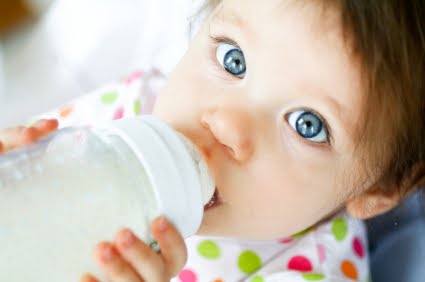
  7. Baby bottles and formula. Use glass baby bottles if possible. If not, several companies make BPA-free bottles. Also avoid liquid baby formula in metal cans, since the liquid can absorb high levels of BPA from the can lining. Powdered formula is a much better choice.

  8. Plastic toys. Remember the uproar over the news that Thomas the Tank Engine was covered in lead paint? We need to bring the same level of awareness to plastic toys. Instead, look for natural products like wood. “One thing I found hard was that I liked to buy secondhand toys from garage sales and whatnot,” Nagel says. “I started focusing more on classic, natural-products toys.”

  9. Cosmetics and baby products. Phthalates are often used in bath and beauty products as carriers for fragrances. Buy unscented soaps, shampoos, lotions and baby powder instead.

  10. Stop buying junk. This is the most important change you can make, according to both of our experts. “This is really hard for Americans, me included, because we’re such consumers,” Nagel says. “If we can, we need to just slow that down and not buy so many products, especially those that are disposable.”
Source: http://thesouthern.com/lifestyles/leisure/article_2e25cb1c-0e21-11df-8b25-001cc4c002e0.html


About Oceanic Defense
We are an international non-profit organization with members in over 60 countries, spanning 6 continents with 1 mission; healthy aquatic ecosystems free from human abuse and neglect. Oceanic Defense teaches people to protect our oceans by acting responsibly as consumers and by making smart decisions in our daily lives. Whether we are buying groceries, commuting to work, planning a vacation or advocating within our own communities; each action we take or decision we make either helps or hurts our oceans. We empower people to be part of the solution rather than part of the problem and work together to protect our blue planet.

Join us on Facebook:www.facebook.com/OceanicDefense
Visit our official website:www.oceanicdefense.org
Follow us on Twitter:www.twitter.com/OceanicDefense

4.06.2010

Plastic Bags Used in DC Drops From 22 Million to 3 Million a Month


The Most Effective Tax Ever?
Washington DC's 5 cent tax on plastic bags, instated just this past January, has already proven to have a phenomenal impact: the number of plastic bags handed out by supermarkets and other establishments dropped from the 2009 monthly average of 22.5 million to just 3 million in January. While significantly reducing plastic waste, the tax simultaneously generated $150,000 in revenue, which will be used to clean up the Anacostia River.

The Washington Post reports:
Council member Tommy Wells (D-Ward 6), sponsor of the bag tax bill, said the new figures show that city residents are adapting to the law far more quickly than he or other city officials had expected.

The tax, one of the first of its kind in the nation, is designed to change consumer behavior and limit pollution in the Chesapeake Bay watershed. Under regulations created by the D.C. Department of the Environment, bakeries, delicatessens, grocery stores, drugstores, convenience stores, department stores and any other "business that sells food items" must charge the tax on paper or plastic bags.

I love this--I really do. A simple 5 cent tax--with revenues going towards an environmental cause voters rallied around--and consumer behavior is changed for the better in a truly big way. I love that 5 cents, which makes up a tiny percentage of total cost of your purchase even if you were just buying a bag of chips and a beverage, was enough to make consumers reconsider taking a plastic bag.

We're going to have to wait to see if this trend continues, of course, but the results are nothing short of stunning so far--there are 19 million less plastic bags in a landfill because of this tax.

Let's hope other municipalities--and dare I suggest, states?--are paying attention.

Source: http://www.treehugger.com/files/2010/03/plastic-bag-use-dc-drops-22-million-3-million.php?campaign=th_weekly_nl


About Oceanic Defense
We are an international non-profit organization with members in over 60 countries, spanning 6 continents with 1 mission; healthy aquatic ecosystems free from human abuse and neglect. Oceanic Defense teaches people to protect our oceans by acting responsibly as consumers and by making smart decisions in our daily lives. Whether we are buying groceries, commuting to work, planning a vacation or advocating within our own communities; each action we take or decision we make either helps or hurts our oceans. We empower people to be part of the solution rather than part of the problem and work together to protect our blue planet.

Join us on Facebook:
www.facebook.com/OceanicDefense
Visit our official website:
www.oceanicdefense.org
Follow us on Twitter:
www.twitter.com/OceanicDefense

2.24.2010

Plastic rubbish blights Atlantic Ocean

Scientists have discovered an area of the North Atlantic Ocean where plastic debris accumulates.

The region is said to compare with the well-documented "great Pacific garbage patch".

Karen Lavender Law of the Sea Education Association told the BBC that the issue of plastics had been "largely ignored" in the Atlantic.

She announced the findings of a two-decade-long study at the Ocean Sciences Meeting in Portland, US.

The work is the conclusion of the longest and most extensive record of plastic marine debris in any ocean basin.

Scientists and students from the SEA collected plastic and marine debris in fine mesh nets that were towed behind a research vessel.

The nets dragged along were half-in and half-out of the water, picking up debris and small marine organisms from the sea surface.

The researchers carried out 6,100 tows in areas of the Caribbean and the North Atlantic - off the coast of the US. More than half of these expeditions revealed floating pieces of plastic on the water surface.

These were pieces of low-density plastic that are used to make many consumer products, including plastic bags.

Dr Lavender Law said that the pieces of plastic she and her team picked up in the nets were generally very small - up to 1cm across.

"We found a region fairly far north in the Atlantic Ocean where this debris appears to be concentrated and remains over long periods of time," she explained.

"More than 80% of the plastic pieces we collected in the tows were found between 22 and 38 degrees north. So we have a latitude for [where this] rubbish seems to accumulate," she said.


The maximum "plastic density" was 200,000 pieces of debris per square kilometre.

"That's a maximum that is comparable with the Great Pacific Garbage Patch," said Dr Lavender Law.

But she pointed out that there was not yet a clear estimate of the size of the patches in either the Pacific or the Atlantic.

"You can think of it in a similar way [to the Pacific Garbage Patch], but I think the word 'patch' can be misleading. This is widely dispersed and it's small pieces of plastic," she said.

The impacts on the marine environment of the plastics were still unknown, added the researcher.

"But we know that many marine organisms are consuming these plastics and we know this has a bad effect on seabirds in particular," she told BBC News.

Nikolai Maximenko from University of Hawaii, who was not involved in the study, said that it was very important to continue the research to find out the impacts of plastic on the marine ecosystem.

He told BBC News: "We don't know how much is consumed by living organisms; we don't have enough data.

"I think this is a big target for the next decade - a global network to observe plastics in the ocean."

Source: http://news.bbc.co.uk/2/hi/science/nature/8534052.stm


About Oceanic Defense
We are an international non-profit organization with members in over 60 countries, spanning 6 continents with 1 mission; healthy aquatic ecosystems free from human abuse and neglect. Oceanic Defense teaches people to protect our oceans by acting responsibly as consumers and by making smart decisions in our daily lives. Whether we are buying groceries, commuting to work, planning a vacation or advocating within our own communities; each action we take or decision we make either helps or hurts our oceans. We empower people to be part of the solution rather than part of the problem and work together to protect our blue planet.

Join us on Facebook:
www.facebook.com/OceanicDefense
Visit our official website:
www.oceanicdefense.org
Follow us on Twitter:
www.twitter.com/OceanicDefense

10.19.2009

Major US Shopping Chains Target Plastic Bags


By Bruce Horovitz, USA TODAY


Just in time for the holidays, reusable shopping bags are about to go decidedly mainstream.

Target (TGT), the fifth-largest U.S. retailer last year, will announce Monday plans to give customers a 5-cent discount for every reusable bag they use to pack their purchases.

The move comes within days of drugstore giant CVS' (CVS) plan to give participating CVS customers $1 cash bonuses on their CVS cards every four times they buy something but don't request plastic bags.

The programs come at a time retailers are feeling heat from advocacy groups, lawmakers and customers to take actions on environmental issues.

In tandem, the two programs could keep billions of plastic bags out of the environment and nudge other big retailers to take similar steps, says Allen Herskowitz, senior scientist at the Natural Resources Defense Council.

"Plastic bags are the most ubiquitous form of waste on the planet," Herskowitz says. "They are among the most deadly forms of marine debris, lethal to threatened species of marine mammals throughout the world."

For retailers, going green is the new gold.

"It's become part of the competitive landscape to demonstrate that it's part of your culture," says David Szymanski, marketing professor at Texas A&M University. "Retailers who want to connect with this generation have to go green."

Although smaller retailers — including Whole Foods (WFMI), Trader Joe's and regional grocer Stop & Shop — have given consumers financial incentives to re-use bags, most big retailers have stopped short of giving customers money to bring their own bags.

For the moment, at least, Wal-Mart, the world's largest retailer, has no plans to pay customers to use their own bags, spokesman Kory Lundberg says.

So the Target and CVS programs are raising eco-eyebrows.

The Target program, which will roll out on Nov. 1 at all 1,700 Target stores nationwide, could save billions of plastic bags. The chain posts upwards of 1.5 billion transactions annually — most ending up in more than one bag.

A pilot test in 100 Target stores earlier this year resulted in a hefty 58% reduction in plastic bags used, says Shawn Gensch, vice president of marketing. "The best-case scenario is that we'll have 100% success and every consumer will use a reusable bag."

The CVS program, rolling out to 7,000 stores over the next three weeks, requires customers wanting to participate to buy a 99-cent tag to be scanned with their CVS card.

"We reward customers for doing good things," says Melissa Studzinski, the chain's director of relationship marketing

Source: http://www.usatoday.com/money/industries/environment/2009-10-18-target-plastic-bags-green-environment_N.htm

8.17.2009

Debate Over Plastic Bags Heats Up In Seattle


Heather Trim, a volunteer for the Seattle Green Bag Campaign, carries around a sample of polluted Pacific Ocean water. She says the ocean's "great garbage patch" of non-biodegradable plastic fragments is the reason for her opposition to disposable plastic bags.The plastics industry is spending more than $1 million to fight a surcharge on grocery bags in Seattle.

NPR - In an effort to reduce plastic and paper waste, the City Council imposed the 20-cent-per-bag charge last year. But the American Chemistry Council helped fund a petition drive that forced the issue to a citywide ballot. That vote is coming up on Aug. 18, and the ACC has contributed approximately $1.4 million for an ad campaign against the surcharge.

Seattle is not the first city to try to discourage the use of plastic bags. San Francisco imposed a partial ban, and Palo Alto and the Seattle suburb of Edmonds have banned the bags outright. But Seattle is the biggest city in the U.S. that has tried to put this kind of fee on bags.

'Great Garbage Patch'

The campaign against the plastic bags comes out of environmentalists' concerns over "the great garbage patch," a huge slick of microscopic bits of non-biodegradable plastic that is circulating in the Pacific Ocean.

Heather Trim, a volunteer with the Seattle Green Bag Campaign, carries a vial of cloudy seawater in her purse as a visual aid. Our plastics are accumulating out there," Trim says.

An estimated 20 to 30 percent of Seattle shoppers bring reusable bags to the store — far higher than in most of the country — but environmentalists here want that number to grow. Trim says the surcharge, which she calls a "fee," is the best way to do this.

Opponents call it a 20-cent "tax."

"I carry recyclable bags in my car every day — always with me," says Jane Petrich, outside a QFC grocery store near the University of Washington. "And 80 percent of the time I forget to take them in with me. But they're in my car!"

If the bags cost 20 cents apiece, she says, she would remember to bring her own bags for sure. Nevertheless, she doesn't like the idea. She says the "tax," as she sees it, would fall hardest on poor shoppers.

That's the message of the plastic-bag makers. Ads on local radio — paid for with money from the ACC — dramatize a husband and wife, lamenting the dawn of a new tax. "A tax on grocery bags is not what we need in this economy," says the announcer.

Business groups have also criticized the proposed ordinance as poorly written, saying it would create a new city bureaucracy to oversee the bag surcharge.

Plastic bags represent only a tiny fraction of 1 percent of the city's garbage, they say, and many of those bags are actually being reused to hold the garbage itself. (Paper bags are also subject to the surcharge, but the paper industry has largely stayed out of the debate. The city ordinance includes paper bags primarily to make sure stores don't just shift from plastic to paper to get around the surcharge.)

Steve Russell, the managing director of the American Chemistry Council's Plastics Division, calls the vote in Seattle "an important battle."

"There are ways to achieve what we all agree is the goal of more recycled material that doesn't punish people on fixed incomes or people less able to pay those kinds of fees," he says.

Source: http://www.npr.org/templates/story/story.php?storyId=111662657&sc=fb&cc=fp

7.30.2009

Teen Decomposes Plastic Bag in Three Months


article submitted by Aquatic Army member Michael DiLuzio
TheRecord.com - Getting ordinary plastic bags to rot away like banana peels would be an environmental dream come true.

After all, we produce 500 billion a year worldwide and they take up to 1,000 years to decompose. They take up space in landfills, litter our streets and parks, pollute the oceans and kill the animals that eat them.

Now a Waterloo teenager has found a way to make plastic bags degrade faster -- in three months, he figures.

Daniel Burd's project won the top prize at the Canada-Wide Science Fair in Ottawa. He came back with a long list of awards, including a $10,000 prize, a $20,000 scholarship, and recognition that he has found a practical way to help the environment.

Daniel, a 16-year-old Grade 11 student at Waterloo Collegiate Institute, got the idea for his project from everyday life.

"Almost every week I have to do chores and when I open the closet door, I have this avalanche of plastic bags falling on top of me," he said. "One day, I got tired of it and I wanted to know what other people are doing with these plastic bags."

The answer: not much. So he decided to do something himself.

He knew plastic does eventually degrade, and figured microorganisms must be behind it. His goal was to isolate the microorganisms that can break down plastic -- not an easy task because they don't exist in high numbers in nature.

First, he ground plastic bags into a powder. Next, he used ordinary household chemicals, yeast and tap water to create a solution that would encourage microbe growth. To that, he added the plastic powder and dirt. Then the solution sat in a shaker at 30 degrees.

After three months of upping the concentration of plastic-eating microbes, Burd filtered out the remaining plastic powder and put his bacterial culture into three flasks with strips of plastic cut from grocery bags. As a control, he also added plastic to flasks containing boiled and therefore dead bacterial culture.

Six weeks later, he weighed the strips of plastic. The control strips were the same. But the ones that had been in the live bacterial culture weighed an average of 17 per cent less.

That wasn't good enough for Burd. To identify the bacteria in his culture, he let them grow on agar plates and found he had four types of microbes. He tested those on more plastic strips and found only the second was capable of significant plastic degradation.

Next, Burd tried mixing his most effective strain with the others. He found strains one and two together produced a 32 per cent weight loss in his plastic strips. His theory is strain one helps strain two reproduce.

Tests to identify the strains found strain two was Sphingomonas bacteria and the helper was Pseudomonas.

A researcher in Ireland has found Pseudomonas is capable of degrading polystyrene, but as far as Burd and his teacher Mark Menhennet know -- and they've looked -- Burd's research on polyethelene plastic bags is a first.

Next, Burd tested his strains' effectiveness at different temperatures, concentrations and with the addition of sodium acetate as a ready source of carbon to help bacteria grow.

At 37 degrees and optimal bacterial concentration, with a bit of sodium acetate thrown in, Burd achieved 43 per cent degradation within six weeks.

The plastic he fished out then was visibly clearer and more brittle, and Burd guesses after six more weeks, it would be gone. He hasn't tried that yet.

To see if his process would work on a larger scale, he tried it with five or six whole bags in a bucket with the bacterial culture. That worked too.

Industrial application should be easy, said Burd. "All you need is a fermenter . . . your growth medium, your microbes and your plastic bags."

The inputs are cheap, maintaining the required temperature takes little energy because microbes produce heat as they work, and the only outputs are water and tiny levels of carbon dioxide -- each microbe produces only 0.01 per cent of its own infinitesimal weight in carbon dioxide, said Burd.

"This is a huge, huge step forward . . . We're using nature to solve a man-made problem."

Burd would like to take his project further and see it be used. He plans to study science at university, but in the meantime he's busy with things such as student council, sports and music.

"Dan is definitely a talented student all around and is poised to be a leading scientist in our community," said Menhennet, who led the school's science fair team but says he only helped Burd with paperwork.

Other local students also did well at the national science fair.

Devin Howard of St. John's Kilmarnock School won a gold medal in life science and several scholarships.

Mackenzie Carter of St. John's Kilmarnock won bronze medals in the automotive and engineering categories.

Engineers Without Borders awarded Jeff Graansma of Forest Heights Collegiate a free trip to their national conference in January.

Zach Elgood of Courtland Avenue Public School got honourable mention in earth and environmental science.

6.29.2009

Simple solution to ocean pollution is in the (non-plastic) bag


AS ENVIRONMENTAL challenges go, climate change is the most significant issue facing our generation. But what chance do we have of getting in place the complex solutions for climate change when it appears we can't even tackle a simple solution for the problem of plastic bags: banning them.

Just like climate sceptics, our political leaders continue to listen to the self-interests of industry that claim plastic bags are not a problem. Those who make them and rely on their cheap supply deny there's much of an environmental impact, an attitude shared by greenhouse-polluting industries. And just like the industries that are responsible for human-induced climate change, manufacturers of plastic bags and the retailers that keep handing them out blame you and me — families and individuals — for the pollution they cause.

Are plastic bags a problem? The United Nations Environment Program this month released the first study of the impact of marine debris throughout the world's oceans. The report — Marine Litter: a Global Challenge — found that plastic, especially bags and polyethylene terephthalate (PET) bottles, is the most pervasive type of marine litter on the planet and that plastic makes up more than 80 per cent of all rubbish found in the oceans. Plastic bags alone make up almost 10 per cent.

UN environment program executive director Achim Steiner said that "some of the litter, like thin-film, single-use plastic bags, which choke marine life, should be banned or phased out rapidly everywhere because there is simply zero justification for manufacturing them any more, anywhere".

In a shocking illustration of the extent of damage that can be caused by rubbish dumped at sea, the report highlighted that much of the litter off Western Australia ends up on the east coast of South Africa. Along the way, animals including birds, fish and turtles lethally mistake the dumped plastic for food.

In Australia, the Federal Government's Threatened Species Scientific Committee has found plastic bags and other marine debris are a direct threat to 20 marine species, including the loggerhead turtle, southern right whale, blue whale and tristan albatross. The committee has listed plastic bags as a "key threatening process" under the Environment Protection and Biodiversity Conservation Act 1999.

Plastic is just like radioactive waste — it doesn't go away. Plastic bags do break up but they simply become smaller and smaller pieces of plastic. Those microscopic pieces of plastic are now entering the food chain earlier as they are ingested by marine life.

Plastic bags are convenient but so, too, are the alternatives. The key issue is the habit we've formed. Just as taking groceries home in a plastic bag has become habit, so, too, would using the cheap, practical alternatives, such as reusable bags made out of washable non plastics, which we already have.

The stubborn refusal to embrace change does not come from the community; it comes from those advising our politicians. Time and time again, the community has raised its communal hands in support of a ban. South Australia and a growing number of communities throughout the country become so fed up with the lack of action that they've moved to introduce their own plastic bag ban.

Not long after stepping into the role of Federal Environment Minister, Peter Garrett publicly announced that our environment had suffered through too many years of inaction and that he would take swift action to ban the dreaded plastic bag.

Just weeks ago, our state and federal environment ministers met in Hobart to discuss waste issues. Credit must be given to them for taking the long-overdue steps towards the serious consideration of a container refund or similar scheme, and tackling electronic waste. But on the topic of plastic bags, they were quiet.

More than 4 million plastic bags are pushed out through supermarket checkouts each year. Of that, just 3 per cent are recycled and the rest end up in our environment or in landfill.

The solution is simple and it has community support. It's about time the Government broke the habit and banned plastic bags nationwide.

Ian Kiernan AO is chairman of Clean Up Australia.

Source: http://www.watoday.com.au/opinion/simple-solution-to-ocean-pollution-is-in-the-nonplastic-bag-20090622-ctyd.html?page=-1

6.13.2009

U.N. environment chief urges global ban on plastic bags


WASHINGTON — Single-use plastic bags, a staple of American life, have got to go, the United Nations' top environmental official said Monday.

Although recycling bags is on the rise in the United States, an estimated 90 billion thin bags a year, most used to handle produce and groceries, go unrecycled. They were the second most common form of litter after cigarette butts at the 2008 International Coastal Cleanup Day sponsored by the Ocean Conservancy, a marine environmental group.

"Single use plastic bags which choke marine life, should be banned or phased out rapidly everywhere. There is simply zero justification for manufacturing them anymore, anywhere," said Achim Steiner, executive director of the U.N. Environment Programme. His office advises U.N. member states on environmental policies.

Steiner's declaration accompanied a UNEP report that identifies plastic as the most pervasive form of ocean litter. According to the report, "Plastic, the most prevalent component of marine debris, poses hazards because it persists so long in the ocean, degrading into tinier and tinier bits that can be consumed by the smallest marine life at the base of the food web."

The ban is already being tested in China, where retailers giving out thin bags can be fined up to $1,464. According to one nationwide survey, 40 billion fewer plastic bags were given out in grocery stores after the law's enactment. In addition, Ireland managed to cut single-use plastic bag consumption 90 percent by levying a fee on each bag that consumers use.

In the United States, only San Francisco has completely banned plastic bags. Los Angeles will do so in 2010. Also, Washington, D.C.'s city council is set to vote on a five-cent-a-bag tax later this month. On first reading, the bill passed unanimously. Similar proposals have failed in New York and Philadelphia.

Keith Christman, senior director for the plastics division of the American Chemistry Council, responded that the term "single-use" is misleading because most people actually reuse plastic bags, "for example, to line their trash cans."

"A ban on plastic bags could also cause some unintended consequences," he said. In particular, the increased demand for paper bags would double greenhouse emissions and create "a dramatic increase in waste," Christman said.

Leading U.S. plastic bag manufacturers aim to increase the recycled content of plastic bags to 40 percent by 2015, he added. That would reduce plastic waste by 300 million pounds a year.

"Recycling is what we see as the best approach for the U.S.," Christman said. "Plastic is just too valuable to waste."

Source: http://www.mcclatchydc.com/251/story/69691.html