It seems like hardly a day goes by without some new report about the health hazards of plastics. If it’s not plastic teethers, it’s baby bottles, or sports bottles or old Tupperware. Trying to tell the polycarbonates from the polyvinyl chlorides is enough to make your head spin.
For an informed yet practical approach to plastics safety, we consulted two experts who also happen to be parents:
Susan Nagel, a professor of obstetrics, gynecology and women’s health at the University of Missouri, who’s been researching plastics for more than 10 years. She’s also the mother of 6-year-old twins. She is slowly but methodically replacing all her plastic food storage containers with Pyrex.
Vincent Cobb, founder of the online store Reusable Bags, which features nonplastic — or at least safer plastic — food-storage products. Cobb has two children, ages 6 and 4. This Thanksgiving, he tossed out the plastic turkey baster. “It’s now a squirt toy for the kids.”
The first bit of advice from our two experts: Don’t panic.
“When people first found out about lead, they were like, ‘Oh my gosh! We have to strip the paint! We have to move out of the house!”‘ Cobb says. “That’s where people are now with plastics.”
Plastics aren’t as toxic as lead, and there’s a lot of research still to be done. But since there are alternatives, it makes sense to limit your exposure. How does that old saying go? Err on the side of caution.
Two problems: BPA and phthalates
The chemical that’s grabbing all the recent headlines is bisphenol A — BPA for short. It’s a synthetic estrogen — yep, like the hormone — and has been linked to heart disease, diabetes, and behavioral and reproductive problems. Scientists worry that developing fetuses and children younger than 6 are particularly vulnerable.
Canada is planning to ban BPA in children’s products. Consumer groups are calling for a ban in the U.S., and the Food and Drug Administration recently agreed to reconsider the issue.
BPA is found in hard plastic products like baby bottles and sports bottles and in the linings of metal cans for food, soft drinks and beer. It’s also in eyeglasses, bike helmets, CD cases and, well, just about everywhere.
“With BPA, we cannot completely figure out where it’s all coming from,” Nagel says. “If you add up people’s exposure from canned foods, dental sealants, drinking out of polycarbonate bottles, all those things we know about, you still can’t account for as high a level as we find in people.
“It’s in so many products. It’s been found in household air. It’s in dust, then you breathe it in. You can decrease your exposure, but you cannot eliminate it.”
The other buzzword lately is phthalates (the “ph” is silent), additives that make plastic more flexible. Phthalates have been linked to reproductive problems and have been falling out of favor for several years (remember the Great Teether Panic of 1999?). The U.S. began banning several phthalates in children’s products in February, but Nagel warns that phthalates will still lurk in older toys, as well as scented soaps, lotions and cosmetics.
The solution: Reduce your exposure
If you’d like to reduce your family’s exposure to plastics, here are 10 places to start:
- Food storage. As you can, replace plasticware with glass, porcelain or stainless steel. Until then, just be cautious in how you use plastic storage containers. Don’t put plastic in the microwave, ever. Heat can break down plastic so that it leaches chemicals into food. Try not to put plastic in the dishwasher — it’s too hot in there, as well — although you do have to clean the stuff. If you put it in the dishwasher, use the top rack, away from the heating element. Older plasticware tends to leach the most, so replace it first.
- Other kitchenware. For plastic glasses and sippy cups, see No. 1. There are glass, metal or wooden alternatives to plastic mixing bowls, colanders, funnels, cutting boards, spatulas and spoons. Ditto for plates and silverware. Some blenders and food processors come with glass bowls. Instead of a vinyl tablecloth, use real cloth.
- Plastic wrap and bags. There aren’t as many practical alternatives to this one. Try aluminum foil. For microwaving, you can cover foods with paper towels. “I can’t speak to the safety of freezing in freezer bags,” Nagel says, “but I do it because at some point you just don’t have a choice.”
- Lunch stuff. Another tricky one, since you can’t send your kids to school with breakable food containers. Reusable Bags has started stocking some options, including snack-size stainless-steel containers and cloth snack bags. “We’ve been waiting for somebody to do this,” Cobb says. “We’ve been looking all over the place."
- Water bottles. Yes, Virginia, it’s possible to live without a plastic water bottle. Nalgene, which pioneered the shatterproof sports bottle, is now making BPA-free polycarbonate bottles. “I’d still recommend something else,” Nagel says. “Use stainless steel or glass.”
- Canned foods. Many of the metal cans used for food are lined with a resin that contains BPA. Instead of canned fruits and vegetables, buy fresh or frozen. Instead of canned beans, buy dried. Look for tomatoes in glass jars, or try canning your own.
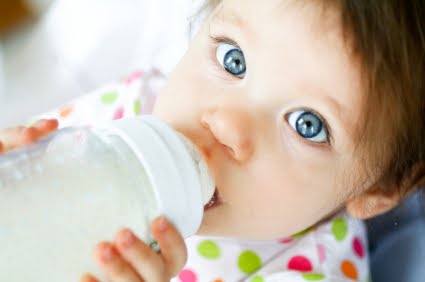
- Baby bottles and formula. Use glass baby bottles if possible. If not, several companies make BPA-free bottles. Also avoid liquid baby formula in metal cans, since the liquid can absorb high levels of BPA from the can lining. Powdered formula is a much better choice.
- Plastic toys. Remember the uproar over the news that Thomas the Tank Engine was covered in lead paint? We need to bring the same level of awareness to plastic toys. Instead, look for natural products like wood. “One thing I found hard was that I liked to buy secondhand toys from garage sales and whatnot,” Nagel says. “I started focusing more on classic, natural-products toys.”
- Cosmetics and baby products. Phthalates are often used in bath and beauty products as carriers for fragrances. Buy unscented soaps, shampoos, lotions and baby powder instead.
- Stop buying junk. This is the most important change you can make, according to both of our experts. “This is really hard for Americans, me included, because we’re such consumers,” Nagel says. “If we can, we need to just slow that down and not buy so many products, especially those that are disposable.”
Source:
http://thesouthern.com/lifestyles/leisure/article_2e25cb1c-0e21-11df-8b25-001cc4c002e0.html
About Oceanic DefenseWe are an international non-profit organization with members in over 60 countries, spanning 6 continents with 1 mission; healthy aquatic ecosystems free from human abuse and neglect. Oceanic Defense teaches people to protect our oceans by acting responsibly as consumers and by making smart decisions in our daily lives. Whether we are buying groceries, commuting to work, planning a vacation or advocating within our own communities; each action we take or decision we make either helps or hurts our oceans. We empower people to be part of the solution rather than part of the problem and work together to protect our blue planet.
Join us on Facebook:www.facebook.com/OceanicDefenseVisit our official website:www.oceanicdefense.orgFollow us on Twitter:www.twitter.com/OceanicDefense